
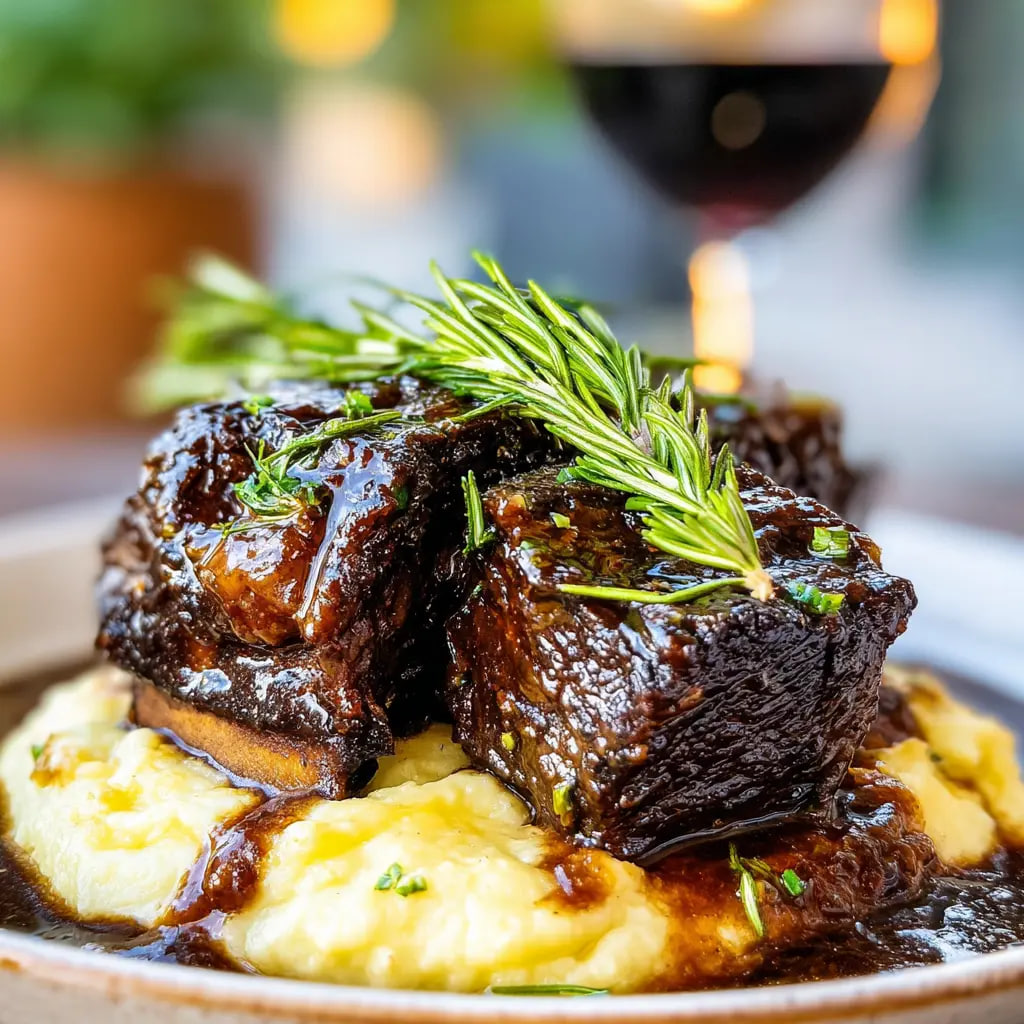
Red Wine Braised Short Ribs
There are meals you make to eat, and then there are meals you make to remember. These Red Wine Braised Short Ribs are firmly in the second category. Fork-tender beef that falls apart at the slightest touch, bathed in a deep, velvety red wine sauce that’s been building flavor for hours in the oven. The kind of dish that fills your entire home with an aroma so good it practically pulls your neighbors through the front door.
This is weekend cooking at its finest — not complicated, just slow. Brown the ribs, build the sauce, slide the Dutch oven into the oven, and walk away for three hours while something extraordinary happens. The wine reduces, the collagen melts, the vegetables dissolve into the braising liquid, and what comes out is restaurant-quality food made in your own kitchen with zero culinary training required. It’s the kind of recipe that makes people think you’ve been secretly attending cooking school. You’ll find this showstopper alongside other impressive-yet-achievable meals in our 90+ recipe collection, and it represents exactly what the book does best — turning simple ingredients into something unforgettable.
Ingredients List
For the short ribs:
- 4 lbs bone-in beef short ribs (about 6–8 pieces)
- 2 tablespoons olive oil
- Salt and black pepper, generously applied
- 2 tablespoons all-purpose flour (for dusting)
For the braising liquid:
- 2 cups dry red wine (Cabernet Sauvignon, Merlot, or Côtes du Rhône)
- 2 cups beef broth
- 1 can (14.5 oz) crushed tomatoes
- 1 large yellow onion, roughly chopped
- 3 carrots, peeled and cut into 2-inch chunks
- 3 celery stalks, cut into 2-inch chunks
- 6 cloves garlic, smashed
- 2 tablespoons tomato paste
- 3 sprigs fresh thyme
- 2 sprigs fresh rosemary
- 2 dried bay leaves
- 1 tablespoon Worcestershire sauce
- 1 teaspoon black peppercorns
- Salt to taste
For serving:
- Creamy mashed potatoes, polenta, or egg noodles
- Fresh parsley, chopped
- Flaky sea salt
Substitution Options:
Boneless short ribs work — reduce braising time by about 30 minutes since there’s no bone insulating the center. If you don’t cook with alcohol, replace the wine with 1 cup extra beef broth plus 2 tablespoons red wine vinegar and a tablespoon of tomato paste for acidity and depth. Chuck roast cut into large pieces is a solid budget alternative to short ribs. Fresh herbs are ideal but 1 teaspoon each of dried thyme and rosemary works in a pinch.
Timing
- Prep Time: 20 minutes
- Cook Time: 3–3.5 hours
- Total Time: About 4 hours (mostly unattended oven time)
Don’t let the total time intimidate you — your hands-on work is barely 20 minutes. The oven does everything else while you go about your day. Start it on a Sunday afternoon and dinner practically cooks itself. This is the definition of smart weekend cooking, and it’s the kind of slow-food philosophy that runs through every chapter of our recipe ebook.
How to Make It
1. Season and Sear the Short Ribs
Pat the short ribs completely dry with paper towels — moisture is the enemy of a good sear. Season all sides generously with salt and pepper, then dust lightly with flour. Heat olive oil in a large Dutch oven over medium-high heat until it shimmers. Sear the ribs in batches, about 3 minutes per side, until a deep brown crust forms on every surface. Don’t crowd the pot — overcrowding steams the meat instead of browning it. Transfer each batch to a plate. This browning step isn’t optional — it creates the foundation of flavor that carries the entire dish.
2. Build the Aromatic Base
Pour off all but 2 tablespoons of the rendered fat. Add the onion, carrots, and celery to the pot and cook for 5 minutes, stirring occasionally, until the vegetables soften and pick up the browned bits from the bottom. Add the smashed garlic and tomato paste, stirring for 1 minute until the paste turns a deep brick red and coats everything.
3. Deglaze with Wine
Pour in the red wine and bring to a boil, scraping the bottom of the pot aggressively with a wooden spoon. Every dark bit stuck to the bottom is pure concentrated flavor — this is called fond, and it’s the secret weapon of every great braise. Let the wine reduce by about half, roughly 4–5 minutes. The alcohol cooks off, leaving behind a deep, complex sweetness that forms the backbone of your sauce.
4. Braise Low and Slow
Add the beef broth, crushed tomatoes, Worcestershire sauce, thyme, rosemary, bay leaves, and peppercorns. Stir and bring to a simmer. Nestle the seared short ribs back into the pot — the liquid should come about two-thirds up the sides of the meat, not cover it completely. Cover the Dutch oven with its lid and transfer to a preheated 325°F oven. Braise for 3 to 3.5 hours. Don’t open the lid for the first 2 hours — just let it work.
5. Check for Doneness
The ribs are done when a fork slides into the meat with zero resistance and the bones pull away easily. The meat should be trembling soft — almost falling apart but still holding its shape enough to plate beautifully. If they’re not there yet, cover and return to the oven for another 30 minutes.
6. Finish the Sauce
Carefully transfer the ribs to a plate and tent with foil. Strain the braising liquid through a fine mesh strainer into a saucepan, pressing on the vegetables to extract every drop of flavor. Discard the solids. Let the sauce settle for 5 minutes, then skim the fat from the surface with a spoon. Simmer the sauce over medium heat for 10–15 minutes until it reduces to a glossy, velvety consistency that coats the back of a spoon.
7. Serve
Plate the short ribs over creamy mashed potatoes, soft polenta, or buttered egg noodles. Spoon the reduced sauce generously over and around the meat. Finish with chopped fresh parsley and a pinch of flaky sea salt. Serve immediately and accept the compliments gracefully.
Nutritional Information
Per serving (1 of 6): approximately 520 calories, 28g fat, 12g carbs, 42g protein, and 2g fiber. Short ribs are rich in protein, iron, zinc, and B vitamins. The bone-in cooking method extracts collagen, which gives the sauce its natural body and provides benefits for joint and gut health. The red wine adds antioxidants while the alcohol cooks off entirely during braising. This is hearty, nutrient-dense food — the kind of meal that genuinely nourishes.
Healthier Alternatives
Leaner cut: Use bone-in beef shanks or chuck roast trimmed of visible fat — you’ll still get beautiful braised texture with less marbling. Lower calorie base: Skip the flour dusting and skim the braising liquid more aggressively after cooking — most of the calories in this dish come from the rendered fat. More vegetables: Add turnips, parsnips, or mushrooms to the braise for extra volume and nutrients that absorb all that incredible sauce. Lighter serving: Plate over cauliflower mash instead of potato for a lower-carb option that still captures every drop of sauce beautifully. Balanced comfort food like this is what our complete collection delivers — indulgent flavor with sensible options.
Serving Suggestions
Creamy mashed potatoes are the classic pairing — they exist to catch that sauce. Soft polenta, buttered egg noodles, or crusty bread for soaking up every last drop all work beautifully. Keep the sides simple — the ribs are the star. A bitter green salad with a sharp vinaigrette cuts through the richness perfectly. For wine pairing, serve the same wine you cooked with — a bold Cabernet Sauvignon or Côtes du Rhône. This is the kind of meal that deserves a set table, real plates, and a candle or two. Make an evening of it.
Common Mistakes to Avoid
Not drying the meat before searing gives you gray, steamed ribs instead of a deep brown crust. Paper towels, every surface, no shortcuts. Crowding the Dutch oven during searing drops the temperature and prevents browning — work in batches of 3–4 pieces maximum. Using cheap wine that you wouldn’t actually drink results in a bitter, harsh sauce — you don’t need expensive wine, but it should be something decent. Braising at too high a temperature makes the meat tough and stringy instead of tender — 325°F is the sweet spot. Skipping the sauce reduction at the end leaves you with a thin, watery braising liquid instead of the rich, glossy sauce that makes this dish extraordinary.
Storing Tips
Refrigerate the ribs and sauce separately in airtight containers for up to 4 days. When chilled overnight, the fat solidifies on top of the sauce and lifts off easily in one piece — this is actually the best way to defat the sauce. Reheat gently on the stovetop over medium-low heat, spooning warm sauce over the ribs as they heat through. Freeze for up to 3 months in portioned containers. Braised meats reheat beautifully and often taste even better the second day as the flavors continue to develop. Making this on a Saturday and serving it Monday night is a power move.
Conclusion
Red Wine Braised Short Ribs are the kind of cooking that slows everything down in the best possible way. Twenty minutes of your attention, three hours of patience, and what comes out of that Dutch oven is something truly spectacular — tender, rich, deeply flavored, and worth every minute of the wait. This is the meal you make when you want to impress someone, celebrate something, or just remind yourself that incredible food doesn’t require incredible effort.
If these short ribs just raised the bar on your home cooking, there’s so much more to discover in our complete 90+ recipe collection. Weeknight dinners, show-stopping weekend meals, and everything in between — all designed for home cooks who believe great food is always worth making. Grab your copy today and cook something unforgettable.
FAQs
What’s the best wine for braising short ribs? A dry, full-bodied red like Cabernet Sauvignon, Merlot, or Côtes du Rhône works best. Avoid anything overly sweet or oaky. The simple rule — if you’d enjoy drinking it with dinner, it’ll be great in the pot. A $10–15 bottle is the sweet spot.
Can I make this in a slow cooker? Yes — sear the ribs and build the sauce on the stovetop first, then transfer everything to the slow cooker. Cook on low for 8 hours or high for 5 hours. You’ll miss the oven’s even heat distribution slightly, but the results are still excellent.
Why are my short ribs tough? They didn’t braise long enough. Short ribs need time for the collagen to break down into gelatin — that’s what creates the melt-in-your-mouth texture. If they’re tough, return them to the oven for another 30–45 minutes. Patience is the only ingredient you can’t substitute.
Can I make this ahead of time? Absolutely — braised short ribs are actually better the next day. Cook them completely, cool, and refrigerate. The flavors deepen overnight and reheating is effortless. This makes them perfect for dinner parties since all the work is done before guests arrive.
Do I have to use bone-in ribs? Bone-in gives the best flavor and texture because the bones release collagen into the sauce as it cooks. Boneless ribs still work — reduce the braising time by 30 minutes and expect a slightly less rich sauce.