
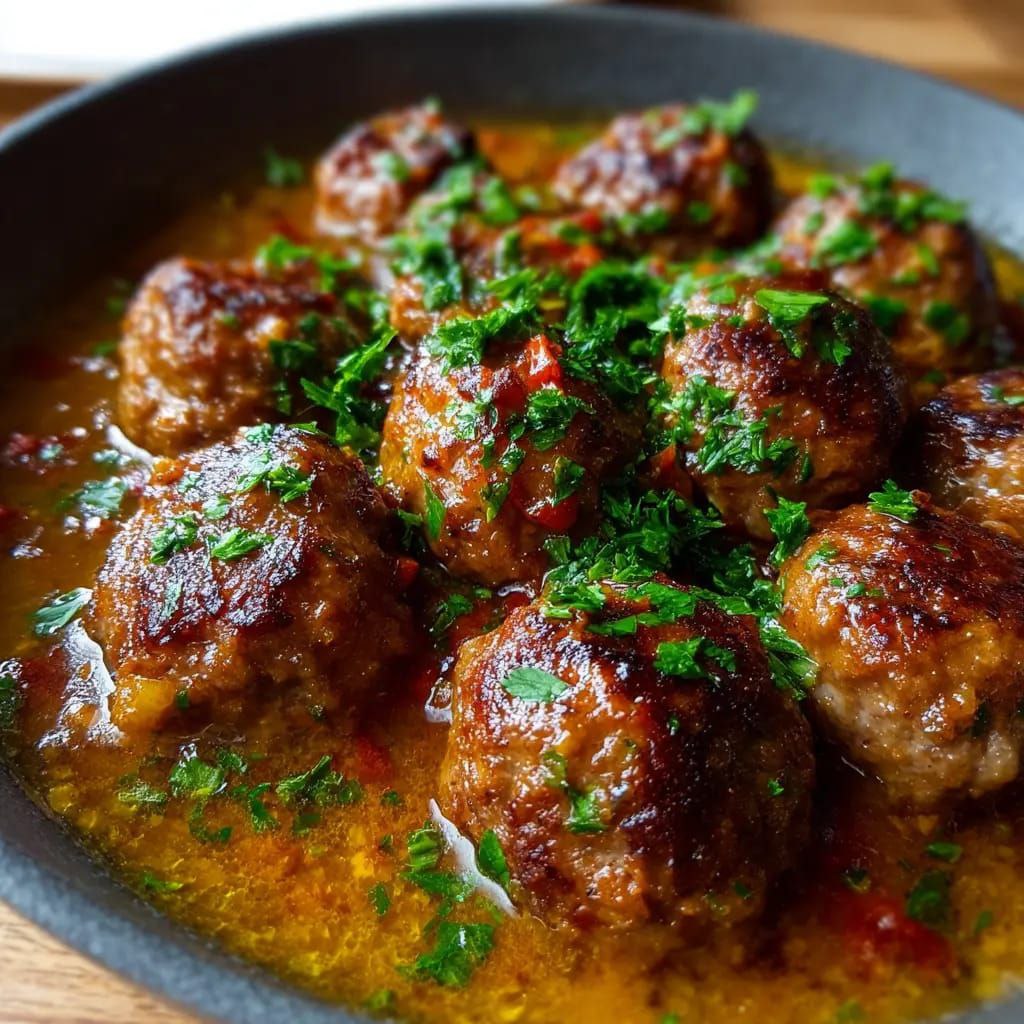
Forget everything IKEA taught you about Swedish meatballs. The real thing — tender, lightly spiced meatballs swimming in a rich, velvety cream gravy so smooth it could put silk out of business — is an entirely different experience. Each meatball is pillowy soft on the inside with a delicate golden sear on the outside, and that gravy clings to every curve like it was born there. This is the kind of dish that makes people push their chair back from the table, sigh deeply, and say “I needed that.” And it takes one skillet and about 35 minutes, which means you can have this hug on a plate any night of the week.
Quick Recipe Facts
- Calories: 470 kcal per serving
- Prep Time: 15 minutes
- Cook Time: 20 minutes
- Servings: 4 servings (about 24 meatballs)
Simple Ingredients You’ll Need
For the meatballs:
- 1 lb ground beef
- 1/2 lb ground pork
- 1/3 cup fine breadcrumbs
- 1/4 cup whole milk
- 1 large egg
- 1 small onion, very finely minced
- 2 cloves garlic, finely grated
- 1/2 teaspoon allspice
- 1/4 teaspoon nutmeg
- 1/4 teaspoon ground white pepper
- 1 teaspoon salt
- 2 tablespoons butter
- 1 tablespoon olive oil
For the cream gravy:
- 3 tablespoons butter
- 3 tablespoons all-purpose flour
- 1 1/2 cups beef broth
- 3/4 cup heavy cream
- 2 teaspoons soy sauce
- 1 teaspoon Dijon mustard
- 1/2 teaspoon Worcestershire sauce
- Salt and white pepper to taste
For serving:
- Egg noodles, mashed potatoes, or lingonberry jam
- Fresh parsley, chopped
- Lingonberry or cranberry sauce on the side
How to Make It: Step-by-Step
1. Soak the breadcrumbs — this is the Swedish secret to tender meatballs. In a small bowl, pour the milk over the breadcrumbs and let them sit for 5 minutes. This technique is called a panade and it is the single reason Swedish meatballs are cloud-soft instead of dense and heavy. The milk-soaked breadcrumbs act like tiny sponges inside the meat, releasing moisture as they cook and preventing the proteins from tightening into tough little hockey pucks. Skip this step and your meatballs will let you know it.
2. Build the meatball mixture with your hands — not a spoon. In a large bowl, combine the ground beef, ground pork, soaked breadcrumbs, egg, finely minced onion, grated garlic, allspice, nutmeg, white pepper, and salt. Now put down any utensils and get your hands in there. Gently mix everything together using a light folding motion until just combined — count to about 30 and stop. Overworking meat is the number one reason homemade meatballs turn rubbery. You want the ingredients incorporated, not kneaded into submission. The mixture should feel soft, slightly sticky, and not fully uniform — a few visible streaks of seasoning are perfectly fine.
3. Roll with wet hands and a gentle touch. Fill a small bowl with water and keep it nearby. Wet your hands — this prevents the meat from sticking and gives you a smoother surface. Scoop about a tablespoon of mixture and roll it between your palms into a ball roughly the size of a walnut. Do not squeeze or compress — just gentle circular motions until they hold their shape. You should get about 24 meatballs. Line them up on a plate or cutting board as you go. If you love hands-on cooking like this that makes the kitchen feel alive, my digital cookbook with 90+ easy recipes is packed with the kind of meals that make you feel like a real cook — not just someone reheating things.
4. Sear in batches — no crowding allowed. Heat the butter and olive oil in a large skillet over medium heat. Once the butter stops foaming, add the meatballs in a single layer with space between each one. Here is where patience earns its paycheck — do not touch them for 2 full minutes. Let the bottom develop a golden-brown crust before you gently roll them to the next side. Cook for about 6–8 minutes total, turning occasionally, until they are evenly browned all over. They do not need to be cooked through completely — the gravy finishes them. Work in two batches if needed. Crowding drops the pan temperature and turns searing into steaming, which gives you grey, sad meatballs with no crust. Transfer the browned meatballs to a plate.
5. Build the gravy in the meatball pan — never waste those brown bits. This is where ordinary becomes extraordinary. Without cleaning the skillet, lower the heat to medium and add three tablespoons of butter. As it melts, use a wooden spoon to scrape up every caramelized speck stuck to the bottom — those brown bits are called fond and they contain more concentrated flavor than anything else in your kitchen right now. Sprinkle in the flour and whisk constantly for a full minute until the roux turns a shade darker and smells faintly nutty. This is not just thickening — you are building the foundation of the entire gravy.
6. The liquid goes in slow — rushing creates lumps. Pour the beef broth in a thin, steady stream while whisking aggressively. If you dump it all at once, the flour seizes into clumps and no amount of stirring fixes it. Slow pour, constant whisk — that is the rhythm. Once the broth is fully incorporated and the mixture starts to simmer and thicken, pour in the heavy cream. Add the soy sauce, Dijon mustard, and Worcestershire sauce. The soy sauce is the invisible ingredient that nobody can identify but everyone agrees makes the gravy taste deeper, richer, and more savory. The Dijon adds a whisper of sharpness that prevents the cream from tasting flat. Let the gravy simmer for 2–3 minutes until it reaches the consistency of warm velvet — thick enough to coat a spoon but fluid enough to pour.
7. Reunite the meatballs with their gravy. Gently nestle every meatball back into the cream gravy. Spoon the sauce over each one so they are fully coated. Lower the heat and let everything simmer together for 5 minutes. This final simmer does two important things — it finishes cooking the centers of the meatballs gently instead of aggressively, keeping them tender, and it allows the gravy to absorb some of the meatball flavor, creating a unified dish rather than two separate components sharing a pan. Give the skillet a gentle swirl occasionally but do not stir violently or the meatballs may break.
8. Plate it like you mean it. Spoon the meatballs and a generous ladle of cream gravy over a bed of wide egg noodles, creamy mashed potatoes, or buttered rice. Drop a spoonful of lingonberry jam — or cranberry sauce if lingonberry is hard to find — on the side of the plate. That sweet, tart burst against the savory cream gravy is the contrast that makes Swedish meatballs Swedish. Finish with a scatter of fresh parsley and carry the plate to the table like you just won a cooking competition — because you basically did.
The kind of dinner that makes a random Tuesday feel like a holiday in Stockholm — that is exactly what fills every page of my full collection of 90+ easy recipes. Real food, real comfort, real simple.
Frequently Asked Questions
Why do I need both beef and pork? Beef brings flavor and structure while pork adds fat, moisture, and tenderness. The combination gives you meatballs that are savory and rich but also impossibly soft. Using beef alone makes them tighter and drier. If you cannot find ground pork, ground turkey or veal works as a substitute, though the flavor will be slightly different.
What is allspice and why does it matter here? Allspice is a single spice that tastes like a blend of cinnamon, cloves, and nutmeg — which is exactly why it got its name. It is the defining flavor in traditional Swedish meatballs and the ingredient that separates them from Italian or American versions. Without it, they taste good. With it, they taste authentically Swedish. You will find it in any grocery store spice aisle. For more recipes that celebrate unique spice profiles, check out my 90+ recipe digital cookbook.
My gravy turned out too thick — what do I do? Simply whisk in a splash of beef broth or cream, a tablespoon at a time, until it reaches your desired consistency. The gravy continues to thicken as it cools, so pull it off the heat when it is slightly thinner than what you want on the plate. It will be perfect by serving time.
Can I make the meatballs ahead of time and freeze them? Yes, and they freeze beautifully. Brown the meatballs but do not make the gravy. Place them on a parchment-lined baking sheet, freeze until solid, then transfer to a freezer bag. They keep for up to 3 months. When ready, make the gravy fresh and drop the frozen meatballs directly in — simmer for 12–15 minutes until heated through.
Final Pro Tip
Here is the detail that transforms homemade Swedish meatballs from excellent to world-class — grate the onion instead of mincing it. Take that small onion and run it across the fine side of a box grater. You get a smooth onion paste that distributes evenly through every single meatball instead of random chunks that create pockets of raw onion flavor. The grated onion also releases its juices directly into the meat mixture, adding moisture from the inside out. Swedish grandmothers have been doing this for generations and it is the reason their meatballs always taste more refined, more cohesive, and impossibly smoother than everyone else’s. One simple swap, completely different result. For more old-world techniques that make modern cooking extraordinary, do not miss my digital cookbook.