
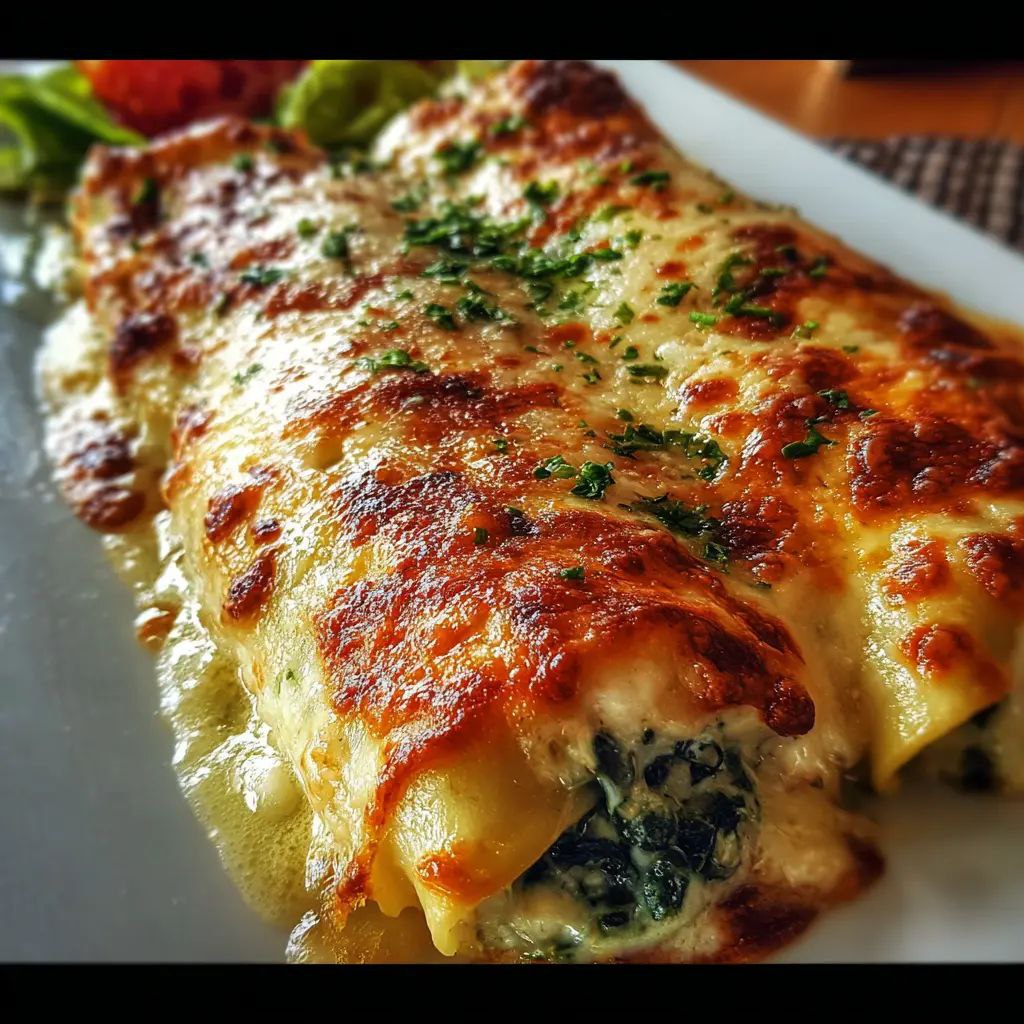
There is a reason Italian grandmothers never wrote down their recipes — they wanted you to come back. This dish is the love child of two of Italy’s greatest comfort foods — the layered, cheesy decadence of lasagna merged with the stuffed, rolled elegance of cannelloni — all baked together in one glorious dish that comes out of the oven bubbling, golden, and smelling like a Sunday afternoon in Tuscany. Sheets of silky pasta wrapped around a rich ricotta and meat filling, blanketed in a velvety béchamel and a slow-simmered tomato sauce, then buried under a mountain of melted mozzarella that stretches from the dish to your plate like it does not want to let go. It feeds a crowd, it freezes beautifully, and it makes anyone who eats it forgive you for anything you have ever done.
Quick Recipe Facts
- Calories: 530 kcal per serving
- Prep Time: 30 minutes
- Cook Time: 40 minutes
- Servings: 8 generous servings
Simple Ingredients You’ll Need
For the meat and ricotta filling:
- 1 lb ground beef
- 1/2 lb Italian sausage (sweet or spicy — your call)
- 15 oz whole milk ricotta cheese
- 1 large egg
- 1/2 cup grated Parmesan cheese
- 3 cloves garlic, minced
- 1 small onion, finely diced
- 2 cups fresh baby spinach, roughly chopped
- 1 teaspoon Italian seasoning
- 1/2 teaspoon salt
- 1/2 teaspoon black pepper
- 1/4 teaspoon nutmeg
- 12 lasagna sheets (oven-ready or regular boiled al dente)
For the tomato sauce:
- 28 oz can crushed San Marzano tomatoes
- 3 cloves garlic, minced
- 1 tablespoon olive oil
- 1 tablespoon tomato paste
- 1 teaspoon sugar
- 1 teaspoon dried oregano
- 1 teaspoon dried basil
- Salt and pepper to taste
For the béchamel sauce:
- 3 tablespoons butter
- 3 tablespoons all-purpose flour
- 2 1/2 cups whole milk
- 1/2 cup grated Parmesan cheese
- 1/4 teaspoon nutmeg
- Salt and white pepper to taste
For the topping:
- 2 cups shredded mozzarella cheese
- 1/2 cup grated Parmesan cheese
- Fresh basil leaves for garnish
How to Make It: Step-by-Step
1. Build the tomato sauce first — it needs time to develop. Heat olive oil in a saucepan over medium heat. Add the minced garlic and stir for 30 seconds until it whispers its aroma into the room. Stir in the tomato paste and cook for another minute — this step concentrates the tomato flavor and caramelizes the sugars, giving you a deeper, richer sauce than dumping raw paste straight into the liquid. Pour in the crushed San Marzano tomatoes, oregano, dried basil, sugar, salt, and pepper. The sugar is not there to make the sauce sweet — it neutralizes the natural acidity of the tomatoes so the final flavor is smooth and balanced. Let it simmer on low heat for 15 minutes while you build the other components. The longer it sits, the better it gets.
2. Cook the meat filling with layers of flavor. In a large skillet over medium-high heat, cook the ground beef and Italian sausage together, breaking them into small crumbles with a wooden spoon. Cook for about 6–7 minutes until deeply browned and no pink remains. Do not drain the fat yet — there is flavor in there. Add the diced onion and cook for 3 minutes until soft. Add the garlic and stir for 30 seconds. Now toss in the chopped spinach. It wilts in about a minute and adds a hidden layer of color and nutrition that nobody can identify but everyone appreciates. Season with Italian seasoning, salt, pepper, and nutmeg. Now drain any excess fat. Let the mixture cool for 5 minutes.
3. Build the ricotta filling that holds everything together. In a large bowl, combine the ricotta cheese, egg, grated Parmesan, and a pinch of nutmeg. The egg acts as a binder — without it, the ricotta turns watery and slides out of the pasta rolls during baking. Beat everything together until smooth and creamy. Once the meat mixture has cooled slightly, fold it into the ricotta. You now have a thick, rich, speckled filling that is simultaneously meaty, creamy, and herby. Taste it — it should make you want to eat it with a spoon before it ever touches pasta. If you love building flavors in layers like this, my digital cookbook with 90+ easy recipes is designed for cooks who want food with depth — not just food that fills a plate.
4. Make the béchamel — the white sauce that changes everything. Melt butter in a medium saucepan over medium heat. Sprinkle in the flour and whisk constantly for one full minute. This cooks out the raw flour taste and builds a smooth roux. Pour the milk in a slow, steady stream while whisking non-stop — patience here is the difference between silk and lumps. Continue whisking as the sauce heats and thickens over 4–5 minutes. When it coats the back of a spoon and holds a line when you drag your finger through it, you are there. Stir in the Parmesan, nutmeg, salt, and white pepper. White pepper is not just a color choice — it has a sharper, more delicate heat than black pepper that works better in cream-based sauces. The béchamel should be thick but still pourable. If it gets too thick, whisk in a splash of milk.
5. Roll the cannelloni — this is where lasagna meets elegance. Preheat your oven to 375°F (190°C). If using regular lasagna sheets, boil them in salted water for about 2 minutes less than the package says — you want them pliable but not fully cooked since they finish in the oven. If using oven-ready sheets, soak them in hot water for 5 minutes to make them flexible enough to roll. Lay a sheet flat on your work surface. Spoon about 3 tablespoons of the meat and ricotta filling along the short end of the pasta. Roll it up tightly into a cylinder, like a cigar. Repeat with all sheets. You should get about 12 rolls.
6. Assemble the masterpiece. Spread a thin layer of tomato sauce across the bottom of a large 9×13 inch baking dish — this prevents sticking and creates the first flavor layer. Arrange the cannelloni rolls seam-side down in a single snug layer. They should fit tightly together — the closeness helps them hold their shape during baking. Pour the remaining tomato sauce in ribbons over the rolls, leaving some pasta visible. Then pour the béchamel over everything, filling the gaps and pooling over the tops of the rolls. Use the back of a spoon to gently spread it into an even layer. This dual-sauce approach is what makes this dish extraordinary — every forkful delivers both the bright acidity of tomato and the creamy richness of béchamel simultaneously.
7. Bury it in cheese and bake until it dreams. Scatter the shredded mozzarella and grated Parmesan evenly across the entire surface. The mozzarella gives you the stretch, the bubbling, the golden spots. The Parmesan adds sharp, salty depth to the crust. Cover the dish tightly with foil and bake for 25 minutes. Then remove the foil and bake uncovered for another 15 minutes until the cheese is deeply golden, the sauce is bubbling up around the edges like a volcano trying to contain itself, and the top has those beautiful leopard-spotted brown patches that signal perfection.
8. The hardest 15 minutes of your life. Pull the dish from the oven and set it on the counter. Do not cut into it. Walk away. Let it rest for a full 15 minutes. During this time the sauces thicken, the filling firms up, and the layers settle into each other so when you finally slice into it you get a clean, beautiful cross-section instead of a soupy, collapsing mess. It will be one of the most difficult 15 minutes you have ever endured because the smell is absolutely relentless. Garnish with fresh basil leaves, slice into generous portions, and serve with a simple green salad and warm garlic bread.
This is the kind of dish that makes people rearrange their weekend plans to come to your dinner table — and there are dozens more like it inside my full collection of 90+ easy recipes. The kind of food that gathers people together and gives them a reason to stay.
Frequently Asked Questions
Can I use store-bought sauces to save time? You absolutely can. A quality jarred marinara and a pre-made alfredo or béchamel will cut your prep time in half and still produce a beautiful result. The homemade sauces push the dish into extraordinary territory, but the assembly and dual-sauce technique alone elevates even store-bought sauces far beyond a regular lasagna.
What if my cannelloni rolls keep unrolling? Two fixes. First, pack them tightly together in the baking dish — the rolls support each other and cannot unravel when pressed against their neighbors. Second, always place them seam-side down so the weight of the roll holds the edge closed. If they still resist, a toothpick through the seam works temporarily — just remove them before serving. For more assembly tips and Italian-inspired recipes, explore my 90+ recipe digital cookbook.
Can I make this entirely ahead of time? This dish was born for make-ahead cooking. Assemble everything, cover tightly with foil, and refrigerate for up to 48 hours. When ready, bake straight from the fridge — add 10 extra minutes to the covered baking time. You can also freeze the fully assembled, unbaked dish for up to 3 months. Thaw overnight in the fridge before baking.
Can I make this vegetarian? Yes. Replace the ground beef and sausage with a mixture of sautéed mushrooms, diced zucchini, and extra spinach. Add an extra half cup of ricotta to keep the filling creamy and substantial. The dual-sauce technique carries so much flavor that you will not miss the meat at all.
Final Pro Tip
Here is the Italian grandmother secret that nobody writes in cookbooks — add one ladle of the starchy pasta cooking water into your béchamel right before assembling. That cloudy, starchy water acts as an invisible binding agent between the béchamel and the pasta. It thins the sauce just enough to flow into every gap and crevice during baking, then as the starch heats it thickens again and fuses the sauce to the surface of each cannelloni roll. The result is pasta that is coated — not just topped — with béchamel. Every single bite has sauce baked into its surface rather than sitting on top like an afterthought. Italian nonnas have been doing this quietly for generations and it is the reason their pasta always tastes different from yours. Until now. For more old-world techniques that transform modern home cooking, do not miss my digital cookbook.