
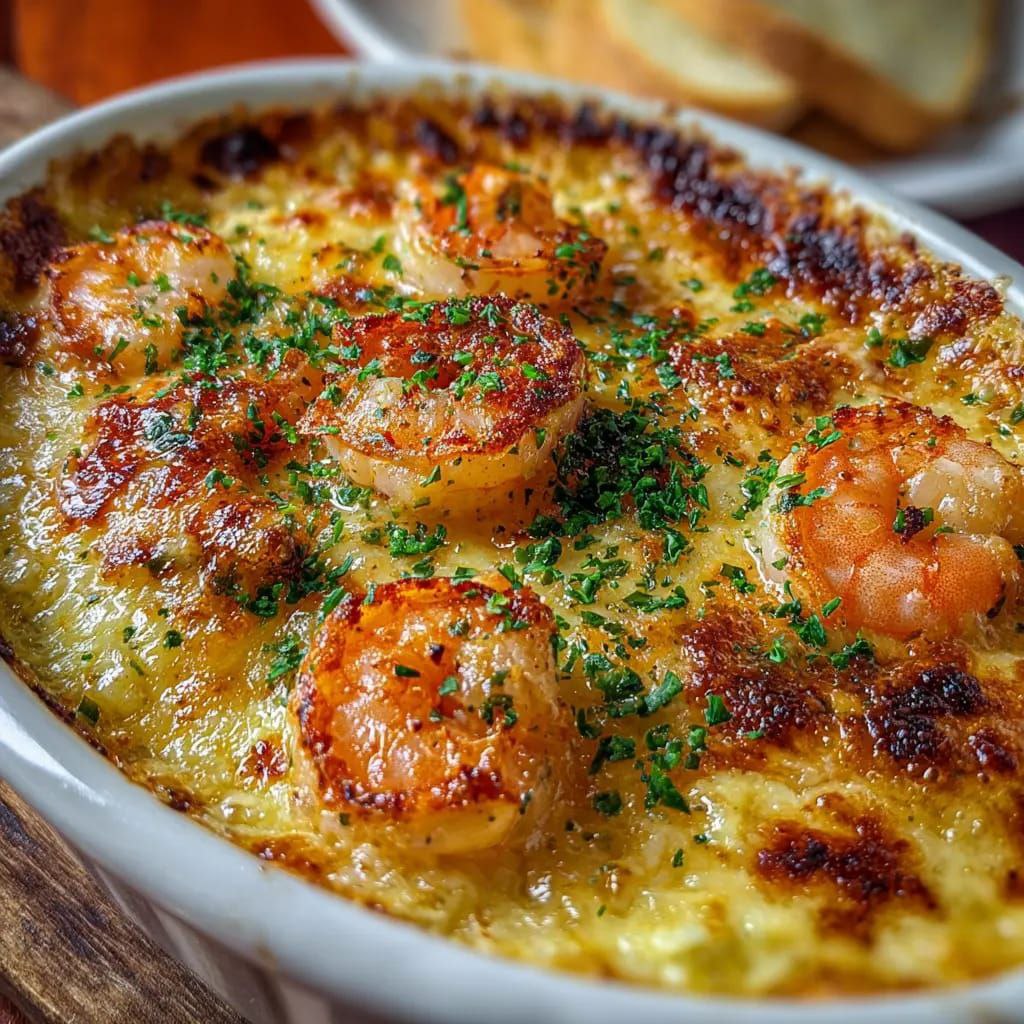
There is a specific look people get when they taste something unexpectedly extraordinary — the fork freezes halfway back to the plate, the eyes widen slightly, and a small involuntary noise escapes before they can stop it. This shrimp bake produces that look every single time. Plump, pink shrimp buried in a garlicky cream sauce so rich it borders on sinful, hiding beneath a crackling golden roof of Parmesan and toasted breadcrumbs that shatters the moment your spoon breaks through. It looks like something from a candlelit bistro on the French coast. It takes 20 minutes and one dish. The gap between how impressive it looks and how stupidly simple it is to make might be the widest in all of cooking.
Quick Recipe Facts
- Calories: 405 kcal per serving
- Prep Time: 8 minutes
- Cook Time: 14 minutes
- Servings: 4 servings
Simple Ingredients You’ll Need
For the shrimp base:
- 1.5 lbs jumbo shrimp, peeled and deveined (tails removed — nobody wants to fight a shrimp tail through cream sauce)
- 3 tablespoons butter
- 1 small shallot, finely minced
- 5 cloves garlic, thinly sliced into chips
- 1/3 cup dry white wine (Pinot Grigio works perfectly — or chicken broth for alcohol-free)
- 3/4 cup heavy cream
- 1/4 cup cream cheese, softened (the secret nobody talks about)
- 1/3 cup grated Pecorino Romano cheese
- 1 tablespoon lemon juice
- 1/2 teaspoon smoked paprika
- 1/4 teaspoon cayenne pepper
- Salt and black pepper to taste
For the golden crust:
- 1/2 cup panko breadcrumbs
- 1/3 cup freshly grated Parmesan cheese
- 2 tablespoons butter, melted
- 1 tablespoon fresh Italian parsley, finely chopped
- 1 teaspoon lemon zest
- 1 teaspoon garlic powder
- 1 tablespoon fresh chives, finely sliced
- Pinch of flaky sea salt
How to Make It: Step-by-Step
1. Build the crust mixture first — it waits patiently while you work. In a small bowl, combine the panko breadcrumbs, grated Parmesan, melted butter, chopped parsley, lemon zest, garlic powder, chives, and a pinch of flaky salt. Toss everything with your fingers until every crumb is coated in butter and flecked with green herbs and golden cheese. The secret to a truly shattering gratin crust is in the ratio — you want enough butter to toast the crumbs golden but not so much that they turn greasy and heavy. Two tablespoons of melted butter to half a cup of panko is the exact sweet spot. Each crumb toasts individually instead of clumping into a dense mat, which means you get hundreds of tiny crispy nuggets instead of one solid sheet. Set this bowl aside and try not to eat it by the handful — it is disturbingly good even raw.
2. Dry the shrimp like your reputation depends on it. Spread the shrimp on a layer of paper towels and press another layer on top. Shrimp are essentially little sponges that carry an absurd amount of surface water, and every drop of moisture they release into the cream sauce dilutes the flavor and thins the consistency. Five seconds of pressing removes enough water to make a real difference in the final dish. Season them with smoked paprika, cayenne, and a light pinch of salt. The paprika is not just for color — it carries a deep, warm smokiness that weaves through the cream sauce later and adds a complexity that people notice but cannot identify.
3. Build the cream base with layers that matter. Melt three tablespoons of butter in a large oven-safe skillet over medium heat. When the foam dies down, add the minced shallot and cook for about 90 seconds until it turns glassy and soft. Now add the sliced garlic — and sliced is important here, not minced. Thin garlic chips toast gently in the butter and later become little golden, crispy jewels scattered through the sauce, giving you bursts of mellow garlic flavor with actual texture instead of garlic that dissolves invisibly into the background. Cook the garlic for about 60 seconds, moving it constantly so it turns light golden but never crosses into brown territory.
4. Deglaze with wine and let the alcohol burn away. Pour in the white wine and let it hit the hot pan with a dramatic sizzle. Stir and scrape up any golden bits stuck to the surface — those caramelized remnants are pure concentrated flavor. Let the wine bubble aggressively for about a minute until it reduces by more than half. The alcohol evaporates completely, leaving behind a concentrated, slightly acidic backbone that prevents the cream from tasting one-dimensionally rich. If using chicken broth instead of wine, add an extra teaspoon of lemon juice later to compensate for the missing acidity. If moments like this in the kitchen make you feel alive, my digital cookbook with 90+ easy recipes is filled with meals that turn cooking into the best 30 minutes of your day.
5. The cream cheese trick that nobody tells you about. Pour in the heavy cream and stir. Now drop in the softened cream cheese — this is the ingredient that separates your shrimp gratin from every other recipe on the internet. Cream cheese melts into the sauce and adds a thickness, a tang, and a velvety cling that heavy cream alone cannot achieve. The sauce goes from pourable to spoonable, from coating to embracing. Whisk until the cream cheese fully dissolves and the sauce is uniform and glossy. Stir in the grated Pecorino Romano — sharper and saltier than Parmesan, it gives the sauce a more assertive, almost peppery bite that stands up to the smoky shrimp without getting lost. Add the lemon juice. Let the whole thing simmer for 2 minutes until it thickens to the consistency of warm velvet.
6. Nestle the shrimp into the sauce like they belong there. Turn the broiler to high and move your oven rack to the top position. Arrange the seasoned shrimp in a single layer across the cream sauce, gently pressing each one halfway into the liquid. Spoon a little sauce over the tops. The shrimp will start turning pink at the edges almost immediately from the heat of the sauce — that is fine. You are not fully cooking them on the stovetop. The broiler finishes them from above while the sauce cooks them from below, creating a dual-heat environment that produces perfectly cooked shrimp in minutes without the rubbery, curled-up texture that comes from direct overcooking.
7. Crown and broil — the final act. Scatter the Parmesan breadcrumb mixture evenly over the entire surface of the skillet. Do not pack it down — loose crumbs toast individually and create a textured, uneven crust with peaks and valleys that catch the broiler heat differently, producing a landscape of golden, dark golden, and pale spots that looks rustic and professional at the same time. A flat, packed crust steams underneath and turns soggy. Loose crumbs shatter. Slide the skillet under the broiler for 3–4 minutes. Do not leave the kitchen. Do not answer your phone. Broilers are unpredictable beasts and the gap between golden perfection and charred regret is measured in seconds. You are watching for deep golden color across the breadcrumb surface and aggressive bubbling around the edges of the cream sauce.
8. Rest, finish, and prepare for compliments. Pull the skillet out and let it sit for exactly 2 minutes. The sauce settles from bubbly and loose to creamy and scoopable during this brief rest — just enough time for you to tear open a warm baguette and mentally prepare for the reaction you are about to receive. Squeeze a final hit of fresh lemon over the golden crust — the acidity slices through the richness and wakes up every other flavor in the dish. Scatter a last handful of fresh chives or parsley across the top and bring the skillet to the table with a trivet and a warning that the dish is hot and the contents are addictive. Serve with crusty bread for dragging through the sauce, a bright lemon-dressed arugula salad on the side, or over a bed of angel hair pasta if you want to turn this into a full feast.
Effortless elegance that makes people think you trained in a French kitchen — that is the energy behind every recipe in my full collection of 90+ easy meals. Food that punches so far above its effort level it almost feels like cheating.
Frequently Asked Questions
What makes this different from a regular shrimp scampi? Scampi is typically a butter and wine sauce served over pasta — delicious but thin and brothy. A gratin adds cream for richness and a breadcrumb crust for texture, then finishes under the broiler to create that signature golden, crackling top. The cream cheese addition in this recipe pushes the sauce into an even thicker, clingier territory that traditional gratins do not usually reach. It is scampi’s more sophisticated, overdressed cousin.
Can I use frozen shrimp? Absolutely — most shrimp at the grocery store was frozen anyway, even the stuff sitting on ice at the counter. Thaw them in cold water for 15 minutes, peel, devein, and dry them thoroughly. The drying step matters even more with frozen shrimp because they release extra water during thawing. Properly dried frozen shrimp perform identically to fresh in this recipe. For more seafood tips and easy dinner ideas, explore my 90+ recipe digital cookbook.
I do not own an oven-safe skillet — what are my options? Make the cream sauce in any regular skillet or saucepan, then transfer everything into a baking dish, individual ramekins, or even a cast-iron gratin dish before adding the topping and broiling. Individual ramekins are actually the most impressive presentation for dinner parties — each guest gets their own personal bubbling golden gratin.
How do I prevent the shrimp from overcooking? Shrimp go from perfect to rubbery in about 60 seconds, so timing is everything. The dual-heat method in this recipe — sauce below and broiler above — cooks them fast and evenly. Pull the skillet the moment the breadcrumbs turn golden and the sauce is bubbling. The residual heat continues cooking the shrimp for another minute after you remove it. If your shrimp are on the smaller side, reduce the broiler time by about a minute.
Final Pro Tip
Here is the restaurant technique that transforms this gratin from delicious to hauntingly good — infuse the cream with the garlic before building the sauce. Before you start cooking anything, warm the heavy cream in a small saucepan with two smashed garlic cloves and a sprig of thyme over the lowest possible heat for 10 minutes. Do not let it simmer — just warm it gently until the garlic perfumes the cream from the inside out. Strain out the solids and use this infused cream in the recipe. The difference is invisible but unmistakable — instead of garlic flavor sitting on top of the cream, it lives inside the cream. Every spoonful carries a deep, rounded, almost sweet garlic warmth that has no sharp edges and no raw bite. It is the difference between garlic in a sauce and a sauce that was born from garlic. Professional chefs do this for cream-based gratins as standard practice and it takes zero extra effort — just a little patience. For more techniques that quietly separate home cooking from professional cooking, do not miss my digital cookbook.