
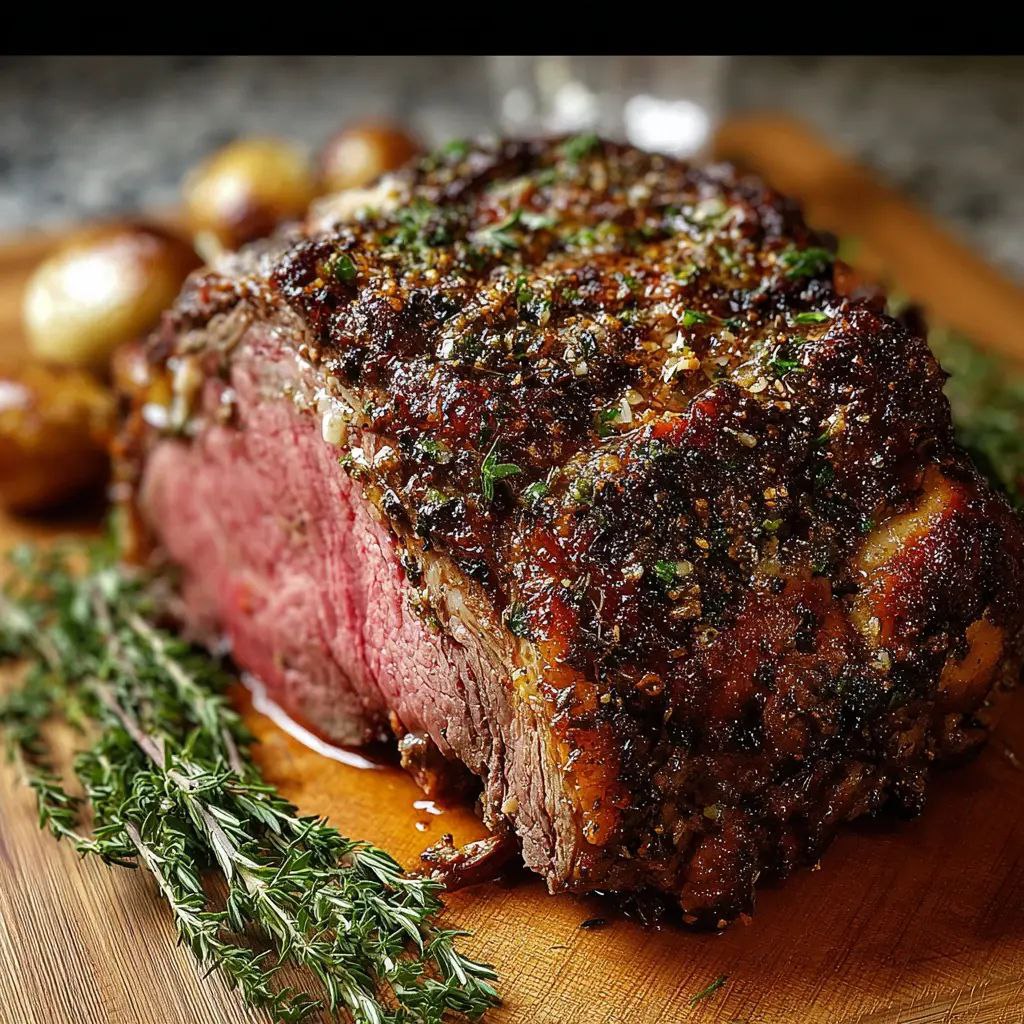
This is the centerpiece. The showstopper. The dish that makes the entire house smell like Christmas and draws everyone into the kitchen asking “is it ready yet?” A perfectly roasted prime rib — thick, ruby-red, impossibly juicy, wrapped in a crackling garlic-herb crust — is the ultimate holiday indulgence. And despite its reputation, it’s far easier than you think. This foolproof recipe walks you through every step so you nail it on the first try, whether you’re a seasoned home chef or roasting your very first prime rib this holiday season.
If holiday cooking inspires you, my digital cookbook with 90+ easy and impressive recipes is packed with meals worthy of celebrations, family gatherings, and every special moment in between.
Calories: 560 per serving Prep + Cook Time: 3 hours 30 minutes (mostly hands-off roasting) Servings: 8–10
Ingredients
For the prime rib:
- 1 bone-in prime rib roast (about 7–8 lbs, 4 bones)
- 6 cloves garlic, finely minced
- 3 tablespoons olive oil
- 2 tablespoons butter, softened
- 2 tablespoons fresh rosemary, finely chopped
- 2 tablespoons fresh thyme leaves
- 1 tablespoon fresh sage, finely chopped
- 1 tablespoon coarse sea salt
- 1 tablespoon freshly cracked black pepper
- 1 teaspoon onion powder
- 1 teaspoon smoked paprika
- 1 teaspoon Dijon mustard
For the au jus:
- Pan drippings from the roast
- 2 cups beef broth
- 1/2 cup dry red wine (Cabernet Sauvignon or Merlot)
- 2 tablespoons butter
- 1 tablespoon fresh thyme leaves
- 1 teaspoon Worcestershire sauce
- Salt and pepper to taste
For the creamy horseradish sauce:
- 1/2 cup sour cream
- 3 tablespoons prepared horseradish
- 1 tablespoon Dijon mustard
- 1 teaspoon lemon juice
- Pinch of salt
How to Make Christmas Prime Rib Step by Step
Step 1: Take the prime rib out of the fridge a full 2 hours before cooking. This is the most important step in the entire recipe and the one rule you absolutely cannot skip. A cold roast thrown into a hot oven cooks unevenly — you’ll end up with a grey, overcooked exterior and a cold center. Two hours at room temperature allows the entire roast to come to an even starting point so it cooks uniformly from edge to edge.
Step 2: While the roast tempers, build the herb crust. In a small bowl, combine the softened butter, olive oil, minced garlic, rosemary, thyme, sage, sea salt, cracked pepper, onion powder, smoked paprika, and Dijon mustard. Mash and stir everything into a thick, fragrant paste. The Dijon isn’t just for flavor — it helps the herb crust adhere to the meat and adds a subtle sharpness that cuts through the richness of the beef.
Step 3: Preheat your oven to 450°F (230°C). Pat the entire surface of the prime rib dry with paper towels. Place the roast bone-side down in a large roasting pan — the bones act as a natural rack, elevating the meat and allowing heat to circulate underneath. Rub the herb paste all over the top and sides of the roast, pressing it into the fat cap so it sticks. Don’t bother coating the bone side — focus all that flavor where it’ll form the crust.
Step 4: Slide the roast into the oven at 450°F and roast uncovered for exactly 20 minutes. This initial high-heat blast serves one critical purpose — it creates that deep, dark, caramelized crust on the outside that locks in juices and delivers an incredible savory crunch in every slice. Your kitchen is going to smell unbelievable during this phase.
Step 5: After 20 minutes, reduce the oven temperature to 325°F (165°C) without opening the door. Continue roasting for approximately 13–15 minutes per pound. For a 7-pound roast, that’s roughly 1 hour 30 minutes to 1 hour 45 minutes after the initial sear. Start checking the internal temperature at the 1 hour 15 minute mark using an instant-read thermometer inserted into the thickest part of the meat, away from the bone.
Step 6: Pull the roast when the thermometer reads 120°F (49°C) for rare, 125°F (52°C) for medium-rare, or 135°F (57°C) for medium. The temperature will climb another 5–10 degrees during resting. Medium-rare at 130°F final temperature is the sweet spot for prime rib — rosy pink from edge to edge with a warm, buttery center. Going past medium is a crime against this beautiful cut of beef, but it’s your kitchen, your rules.
Step 7: Transfer the roast to a large cutting board, tent it loosely with foil, and let it rest for a minimum of 20 minutes — 30 is even better. This resting period is everything. The muscle fibers relax, the juices redistribute evenly throughout the meat, and the internal temperature evens out. If you skip this step, all those precious juices flood out the moment you carve and you’re left with dry meat. Patience here pays off massively.
Step 8: While the roast rests, make the au jus. Place the roasting pan on the stovetop over medium-high heat. Pour in the red wine and scrape up every single brown bit stuck to the bottom — those caramelized drippings are concentrated beef flavor. Let the wine reduce by half, about 2 minutes. Add the beef broth, Worcestershire sauce, and fresh thyme. Simmer for 8–10 minutes until the liquid reduces and deepens in flavor. Whisk in two tablespoons of butter at the end for a glossy, velvety finish. Season with salt and pepper, then strain through a fine mesh sieve into a warm gravy boat.
Step 9: Make the horseradish sauce by stirring together the sour cream, prepared horseradish, Dijon mustard, lemon juice, and a pinch of salt. It takes 30 seconds and adds a cool, sharp contrast that cuts through the richness of the beef perfectly. Refrigerate until serving.
Step 10: Carve the prime rib by first cutting along the bone to remove it in one piece — save those bones for gnawing on later, they’re the cook’s reward. Then slice the roast into thick slabs, about 3/4 inch each. Arrange them on a warm platter, pour the au jus around the slices, and serve the horseradish sauce on the side. Pair with Yorkshire pudding, creamy mashed potatoes, roasted Brussels sprouts, glazed carrots, or a classic Caesar salad.
A roast this magnificent is the crown jewel of any holiday table, and meals like this are exactly what fill the pages of my complete recipe collection — food that gathers people together and creates memories that last a lifetime.
Frequently Asked Questions
How do I choose the right prime rib at the store? Ask your butcher for a bone-in standing rib roast, USDA Choice or Prime grade. Look for generous marbling — those white streaks of fat running through the meat are what make prime rib so tender and flavorful. Plan on about one pound per person, or one bone for every two guests.
What if I don’t have an instant-read thermometer? Get one. Seriously — it’s the single most important tool for roasting any large cut of meat. They cost less than the roast itself and eliminate all guesswork. Without one, you’re gambling with an expensive piece of beef. For more essential kitchen tool recommendations, my 90+ recipe digital cookbook includes tips that set you up for success every time.
Can I make prime rib without the bones? A boneless rib roast works fine, but bone-in is superior. The bones insulate the meat during roasting, slow down cooking for a more even result, and add flavor to the drippings. If you go boneless, reduce the cooking time by about 10 minutes total and use a roasting rack so air circulates underneath.
My prime rib came out more done than I wanted — what happened? The most common mistakes are not letting the roast come to room temperature first, not pulling it early enough to account for carryover cooking, or cutting into it too soon without resting. Remember — the internal temperature rises 5–10 degrees after you remove it from the oven. Always pull it 10 degrees before your target.
Can I prep the prime rib the night before? Yes. Season the roast with the herb paste, wrap it tightly in plastic wrap, and refrigerate overnight. The salt and herbs will penetrate deeper into the meat, giving you even more flavor. Just remember to pull it out 2 hours before cooking to bring it to room temperature.
Conclusion
Christmas Prime Rib isn’t just a recipe — it’s the heart of the holiday table. A towering, herb-crusted roast with a blushing pink center, served with rich au jus and sharp horseradish sauce, surrounded by the people you love most. It’s the meal that makes Christmas feel like Christmas. And with this foolproof method, you’ll carve it with confidence and pride every single time. For more show-stopping recipes that make holidays and special occasions effortless, grab your copy of my full digital cookbook with 90+ recipes and make every gathering unforgettable.