
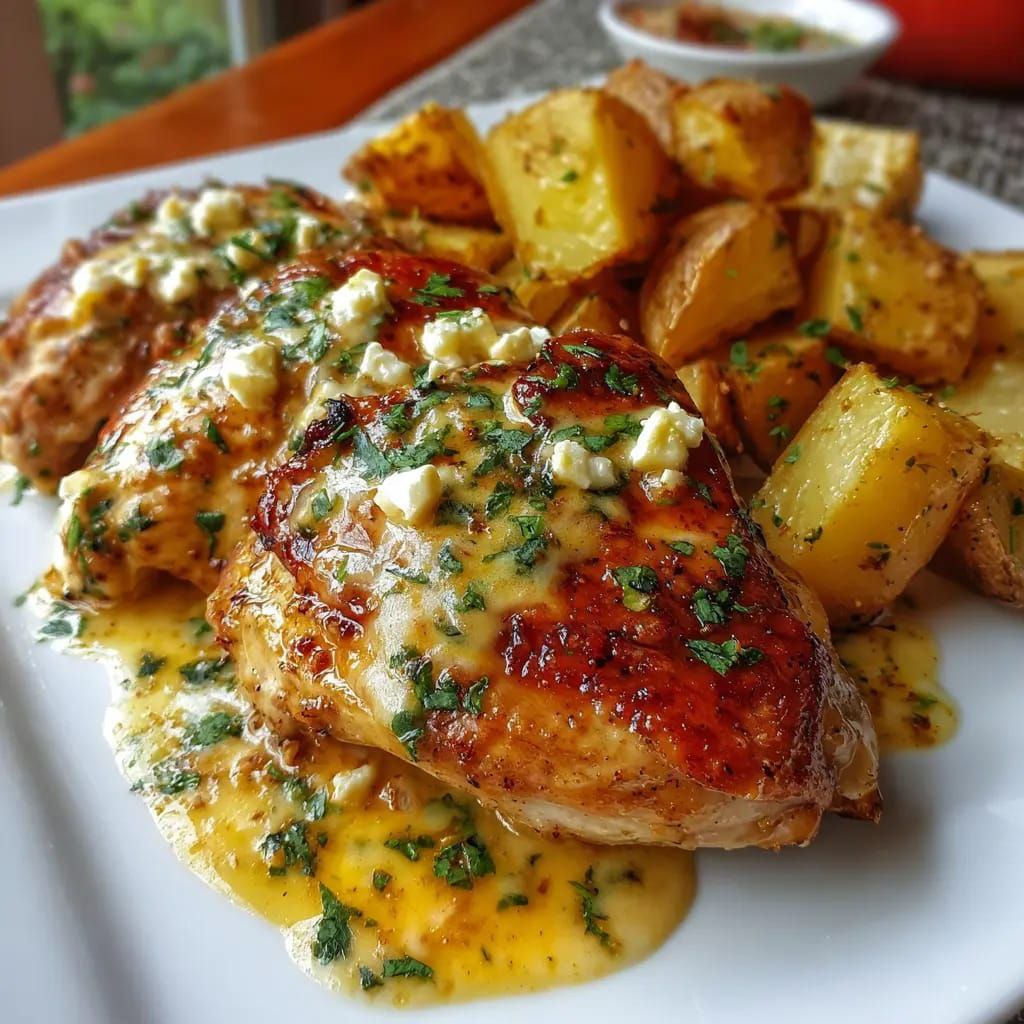
Some nights you need a dinner that asks nothing from you and gives you everything in return. This is that dinner. Picture this — thick chicken breasts roasted until the skin is golden and crackling, sitting in a pool of the most outrageously creamy three-cheese sauce you have ever tasted, surrounded by perfectly caramelized roasted vegetables that soak up every drop. It is the kind of meal that makes the whole family materialize in the kitchen doorway asking “what smells so good?” before you even set the table. One pan. Forty minutes. Zero regrets.
Quick Recipe Facts
- Calories: 485 kcal per serving
- Prep Time: 15 minutes
- Cook Time: 30 minutes
- Servings: 4 servings
Simple Ingredients You’ll Need
For the roasted chicken and vegetables:
- 4 bone-in, skin-on chicken breasts
- 1 lb baby potatoes, halved
- 2 cups broccoli florets
- 1 large red bell pepper, cut into thick strips
- 1 medium zucchini, sliced into half-moons
- 3 tablespoons olive oil
- 1 teaspoon smoked paprika
- 1 teaspoon garlic powder
- 1 teaspoon dried Italian seasoning
- 1 teaspoon salt
- 1/2 teaspoon black pepper
- 2 sprigs fresh rosemary
For the three-cheese sauce:
- 2 tablespoons butter
- 2 cloves garlic, finely minced
- 2 tablespoons all-purpose flour
- 1 1/4 cups whole milk
- 1/2 cup shredded sharp cheddar cheese
- 1/4 cup shredded Gruyère cheese
- 1/4 cup grated Parmesan cheese
- 1/2 teaspoon Dijon mustard
- 1/4 teaspoon nutmeg
- Salt and pepper to taste
- Fresh parsley for garnish
How to Make It: Step-by-Step
1. Get the oven blazing and prep the chicken. Preheat your oven to 425°F (220°C). Take the chicken breasts out of the fridge 20 minutes early — cold chicken roasts unevenly and the skin never crisps right. Pat them dry with paper towels. This sounds boring and repetitive because every recipe says it, but the reason every recipe says it is because it is the single most important thing you can do for crispy skin. Moisture on the surface creates steam. Steam is the enemy of crunch. Dry skin crisps. End of story. Season the chicken generously on all sides with smoked paprika, garlic powder, Italian seasoning, salt, and pepper. Rub it in like you are giving the chicken a little massage — you want the spices in every crevice.
2. Build the vegetable bed. In a large bowl, toss the halved baby potatoes, broccoli florets, bell pepper strips, and zucchini slices with olive oil and a good pinch of salt and pepper. Spread them across a large rimmed baking sheet in a single layer — and this is where most people go wrong. If the vegetables overlap or pile up, they steam instead of roast, and steamed vegetables on a baking sheet are a sad, soggy disappointment. Give every piece its own personal space on the pan. Use two pans if you have to. Crispy, caramelized edges require breathing room.
3. Nestle the chicken on top and let the oven do the heavy lifting. Place the seasoned chicken breasts skin-side up directly on top of the vegetables. Tuck the rosemary sprigs between the pieces. The chicken juices drip down into the vegetables as it roasts, basting them in savory, herby flavor from above — this is the genius of one-pan cooking. Slide it into the oven and roast for 28–35 minutes until the chicken skin is deep golden and crackling and the internal temperature at the thickest part reads 165°F (74°C). The potatoes should be fork-tender and the broccoli should have charred tips. If you love the simplicity of meals like this where the oven does all the work, my digital cookbook with 90+ easy recipes was designed exactly for this kind of cooking — maximum flavor, minimum effort.
4. Build the cheese sauce while everything roasts. This is the part that elevates the entire meal from great to absolutely transcendent, and it takes exactly 7 minutes. Melt the butter in a medium saucepan over medium heat. Add the minced garlic and stir for 30 seconds — just until it whispers its aroma into the room without browning. Sprinkle in the flour and whisk constantly for one full minute. This step cooks out the chalky raw flour taste and creates a smooth roux that forms the backbone of the sauce.
5. Slowly bring in the milk — patience pays off here. Pour the milk in a thin, steady stream while whisking non-stop. If you dump it all at once, the flour clumps and you spend the next five minutes cursing at lumps. Slow and steady wins this race. Keep whisking over medium heat for 3–4 minutes as the sauce thickens. You will feel the resistance change in your whisk — it goes from watery to silky to a consistency where the sauce coats the back of a spoon and holds a line when you drag your finger through it. That is the moment.
6. Melt in the triple threat. Lower the heat and add the shredded cheddar, Gruyère, and grated Parmesan one handful at a time, stirring after each addition until completely melted. The cheddar brings sharp, punchy flavor. The Gruyère adds a nutty, slightly sweet depth and the most incredible smooth melt. The Parmesan delivers that salty, umami backbone that makes you close your eyes and wonder why you ever used jarred cheese sauce. Stir in the Dijon mustard and nutmeg — the mustard adds a subtle tang that balances the richness and the nutmeg is the invisible ingredient that makes people say “I cannot figure out what makes this taste so good.” Season with salt and pepper to taste.
7. Bring everything together for the grand finale. Pull the roasting pan from the oven. Transfer the chicken breasts and roasted vegetables to a warm serving platter or individual plates. Pour that glorious three-cheese sauce in a wide, generous ribbon across the chicken, letting it cascade down the sides and pool around the vegetables. The sauce hits the hot chicken skin and the caramelized vegetables and melts into every corner of the plate. Scatter fresh parsley over the top and serve immediately.
8. Watch the reactions. Put the platter in the center of the table and step back. The golden chicken glistening under a river of cheese sauce, surrounded by colorful roasted vegetables — it looks like a magazine cover shot. But the real magic happens when everyone takes their first bite and the table goes silent for a moment. That silence is the highest compliment any cook can receive.
Meals that create that kind of silence at the table are exactly what you will find inside my full collection of 90+ easy recipes — food that stops conversations because mouths are too full and too happy to talk.
Frequently Asked Questions
Can I use boneless, skinless chicken breasts instead? You can, but you lose two things — the crispy skin and the extra juiciness that the bone provides during roasting. If you go boneless, reduce the roasting time to about 20–22 minutes and watch them closely since they dry out faster. Basting them with a spoonful of the cheese sauce halfway through helps keep them moist.
What if my cheese sauce turns grainy or lumpy? Two common causes. First, the heat was too high when you added the cheese — always melt cheese on low heat with gentle stirring. Second, the flour was not fully cooked into the butter before the milk went in. If it does happen, pour the sauce through a fine mesh strainer or blend it with an immersion blender for 10 seconds and it smooths right out. For more troubleshooting tricks and beginner-friendly tips, explore my 90+ recipe digital cookbook.
Can I swap the vegetables for others? Absolutely. Asparagus, Brussels sprouts, butternut squash, sweet potatoes, cauliflower, or green beans all roast beautifully at this temperature. Just keep the pieces roughly the same size so everything cooks evenly. Harder vegetables like sweet potatoes may need a 5-minute head start before the chicken goes on.
How do I reheat leftovers without ruining the cheese sauce? Store the chicken, vegetables, and sauce separately if possible. Reheat the chicken and vegetables in a 350°F oven for 12 minutes covered with foil. Warm the cheese sauce gently on the stovetop with a splash of milk, whisking constantly. Reassemble on the plate and it tastes nearly as good as fresh.
Final Pro Tip
Here is the detail that separates a home cook from someone who truly understands food — dry brine the chicken the night before. Season the breasts with salt and place them uncovered on a plate in the fridge overnight. Two things happen while you sleep. First, the salt draws moisture to the surface, then dissolves back into the meat, seasoning it deeply all the way through instead of just on the surface. Second, the uncovered fridge air dries the skin overnight, which means when it hits that 425°F oven, it crisps into a golden, crackly shell that shatters when you cut into it. This one overnight step requires 30 seconds of work and delivers restaurant-quality results that no amount of last-minute seasoning can match. For more secrets like this that transform everyday meals, do not miss my digital cookbook.