
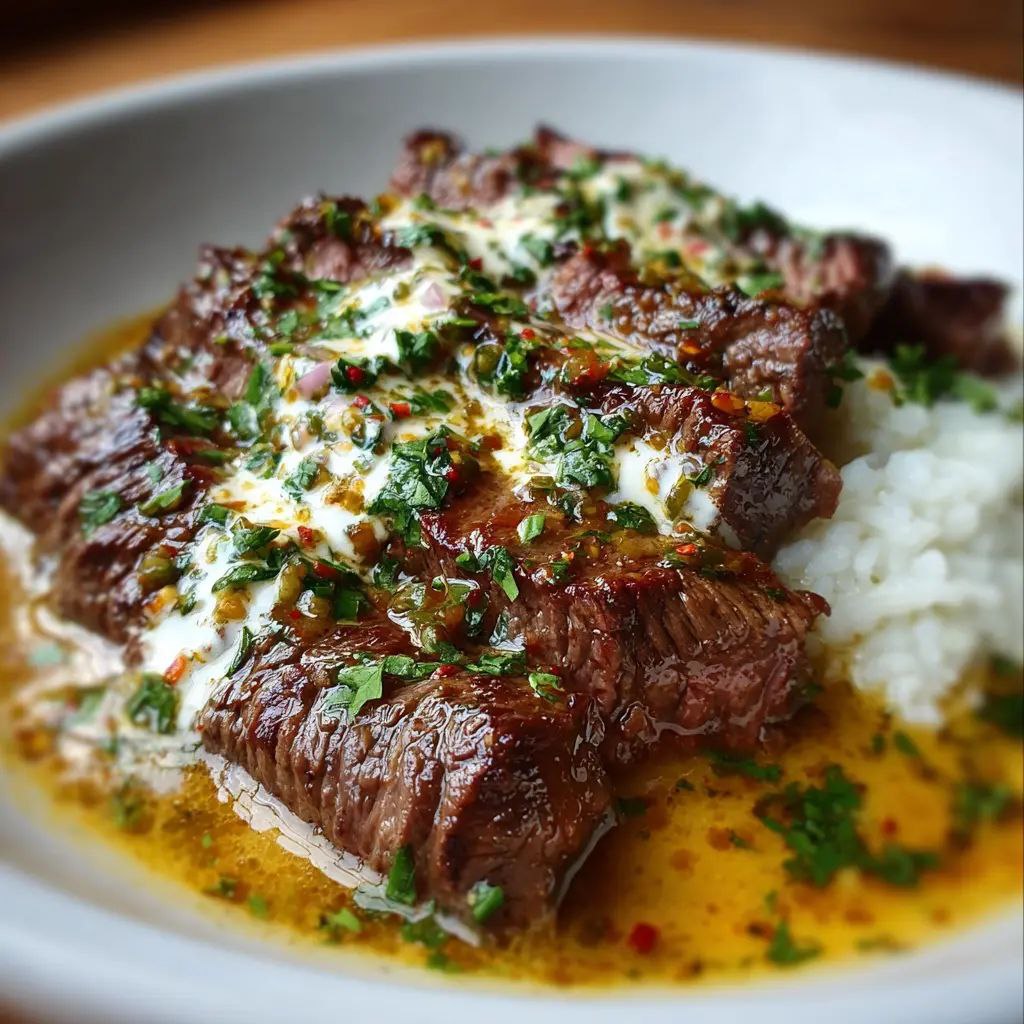
Every great steakhouse has a dish they never put on the menu — the one the chef makes for themselves after a long shift. A thick, perfectly seared steak drenched in a silky, sharp Dijon cream sauce that clings to every slice. This is that dish. And the beautiful irony is that it takes about 20 minutes, uses one skillet, and requires zero professional training. Just good meat, hot iron, and a sauce so addictive you will be eating it with a spoon when no one is watching.
Quick Recipe Facts
- Calories: 525 kcal per serving
- Prep Time: 5 minutes
- Cook Time: 15 minutes
- Servings: 2 servings
Simple Ingredients You’ll Need
For the steak:
- 2 ribeye or strip steaks (about 1 inch thick, 8 oz each)
- 2 tablespoons olive oil
- 2 tablespoons butter
- 1 teaspoon coarse sea salt
- 1 teaspoon cracked black pepper
- 2 sprigs fresh thyme
- 2 cloves garlic, smashed
For the creamy Dijon sauce:
- 2 tablespoons butter
- 1 small shallot, finely minced
- 2 tablespoons Dijon mustard
- 1 tablespoon whole grain mustard
- 3/4 cup heavy cream
- 1/3 cup beef broth
- 1 teaspoon Worcestershire sauce
- 1 tablespoon fresh tarragon, chopped (or parsley)
- 1 teaspoon lemon juice
- Salt and pepper to taste
How to Make It: Step-by-Step
1. The 30-minute rule that changes everything. Pull your steaks out of the fridge a full 30 minutes before they go anywhere near a pan. This is not optional — it is the single biggest difference between a steak that cooks evenly and one that ends up grey on the outside and cold in the middle. While they rest on the counter, pat them aggressively dry with paper towels. Every drop of moisture you remove gets you one step closer to that dark, crackling crust you see in steakhouse photos. Season all sides with sea salt and cracked pepper. That is it. Good steak does not need a spice cabinet — it needs heat and confidence.
2. Get your skillet angry. Set a heavy cast-iron skillet over high heat and walk away for 3 full minutes. You want this pan so hot that a drop of water vaporizes on contact. This is the moment most home cooks get nervous and turn the heat down — don’t. The high heat is what creates the Maillard reaction, that complex chemical process that transforms the surface of your steak from raw meat into a deeply caramelized, almost nutty crust. Add the olive oil, wait until it barely starts to smoke, and lay the steaks in gently away from you.
3. Hands off — let the fire work. Do not move, press, poke, or peek under the steaks for 4 full minutes. Every time you lift a steak to check, you break the contact with the pan and restart the searing process. After 4 minutes, flip once. Drop in the butter, thyme sprigs, and smashed garlic cloves. The butter will foam immediately — tilt the pan and baste the steaks with that golden, herby butter for 2 minutes using a spoon. This is the technique that separates home cooking from restaurant cooking, and now it is yours. If moments like these excite you in the kitchen, my digital cookbook with 90+ easy recipes is packed with the kind of meals that make cooking feel like an event.
4. Know when to walk away. For medium-rare, pull the steaks when a thermometer reads 130°F (54°C). For medium, aim for 140°F (60°C). Transfer them to a warm plate and tent loosely with foil. Let them rest for 5 minutes — no exceptions. During this time the temperature climbs another 5 degrees and the muscle fibers relax, pulling all those juices back toward the center instead of letting them flood your cutting board the moment you slice.
5. Build the sauce in the steak’s footprint. This is where the real magic lives. Do not clean that skillet — every brown bit stuck to the surface is concentrated steak flavor waiting to be transformed. Lower the heat to medium and add two tablespoons of butter. Once melted, drop in the minced shallot and cook for about 90 seconds until it turns soft and translucent. Shallots are milder and sweeter than onion, which is exactly what this elegant sauce needs.
6. The two-mustard trick nobody tells you. Stir in the Dijon mustard and whole grain mustard together. The Dijon gives you a smooth, sharp, peppery backbone while the whole grain adds little pops of texture and a more rustic, rounded heat. Using both creates a depth of flavor that a single mustard can never achieve. Cook the mustards in the butter for about 30 seconds — just enough to bloom their flavor and take the raw edge off.
7. Bring in the cream and let it do its thing. Pour in the heavy cream and beef broth. Stir everything together while scraping up those precious brown bits from the bottom of the pan — chefs call this deglazing and it is the foundation of every great pan sauce. Add the Worcestershire sauce and let the entire thing simmer for 3–4 minutes. You will watch it transform from a thin, loose liquid into a velvety, golden sauce that coats the back of a spoon like silk. Stir in the fresh tarragon and lemon juice right at the end — the herbs stay bright and the lemon lifts the richness of the cream so the sauce never feels heavy.
8. Plate it like you own the place. Slice the rested steaks against the grain into thick, juicy strips. Fan them across a warm plate and pour that gorgeous creamy Dijon sauce right over the top, letting it pool around the edges. Serve alongside crispy roasted potatoes, buttered green beans, a simple arugula salad, or a warm baguette that you can drag through every last drop of sauce on the plate.
The kind of dinner that makes a random Wednesday feel like a celebration — that is exactly what you will find on every page of my full collection of 90+ easy recipes. Real food, real flavor, real simple.
Frequently Asked Questions
I do not have a cast-iron skillet — what else works? Any heavy-bottomed stainless steel pan will get the job done. The key is weight — heavier pans hold heat better, which means a more consistent sear. Avoid non-stick pans entirely for this recipe. They cannot handle the extreme heat needed for a proper crust and they will not develop the brown bits you need for the sauce.
Can I use a different cut of steak? Absolutely. Filet mignon gives you a more tender, buttery result. Sirloin is a budget-friendly option that still tastes great with this sauce. Even a thick pork chop works beautifully — the creamy mustard sauce is incredibly versatile. For more pairing ideas and easy dinner recipes, check out my 90+ recipe digital cookbook.
What if I do not have fresh tarragon? Fresh parsley is the easiest substitute and works perfectly. Tarragon has a subtle anise-like flavor that pairs beautifully with mustard and cream, but parsley brings its own fresh, clean brightness that complements the sauce just as well. Use whatever you have — the sauce is forgiving.
My sauce came out too thin — what happened? It probably needed another minute or two of simmering before adding the cream, or the heat was too low during the reduction. If it happens, simply let it simmer uncovered for an extra 2 minutes after adding the cream. It thickens quickly once the liquid evaporates. You can also whisk in a tiny pinch of cornstarch mixed with cold water for an instant fix.
Final Pro Tip
Here is the detail that turns a good pan sauce into an extraordinary one — finish it with cold butter. Right before you pour the sauce, drop in one small cube of cold butter and swirl the pan gently until it melts in. This technique is called “monter au beurre” and French chefs have used it for centuries. The cold butter emulsifies into the sauce, giving it a glossy, restaurant-quality sheen and a velvety richness that cream alone cannot deliver. One cube. Five seconds. The difference is staggering. For more secrets like this that elevate everyday cooking, do not miss my digital cookbook.