
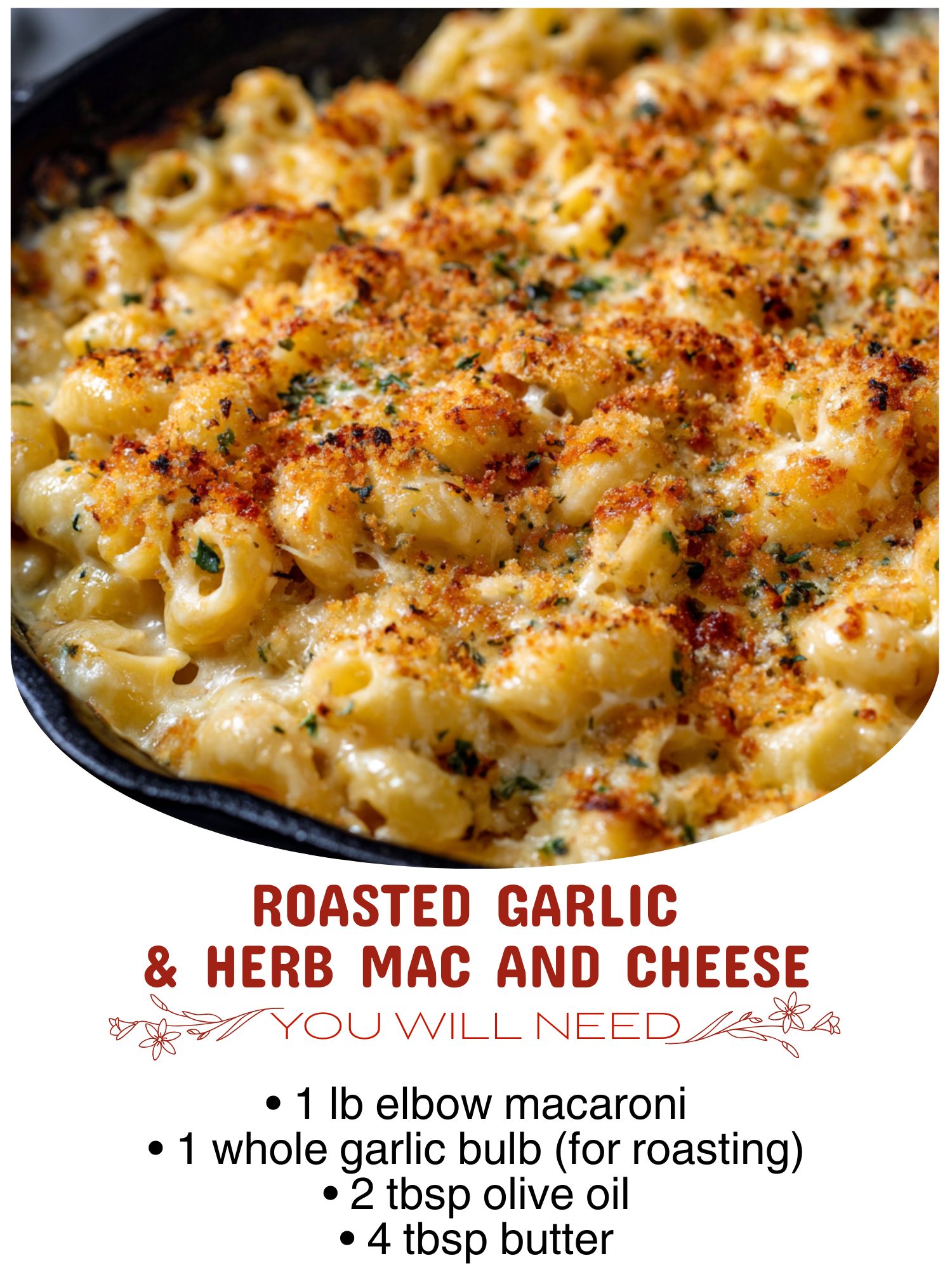
Regular mac and cheese is good. Mac and cheese built on a foundation of slow-roasted garlic and fresh herbs is something else entirely. This Roasted Garlic and Herb Mac and Cheese takes everything familiar and beloved about the classic and layers in a depth of flavor that makes every bite genuinely interesting.
Rich, creamy, deeply savory — and still completely achievable on a weeknight.
Quick Info
- Prep Time: 15 minutes
- Cook Time: 30 minutes (plus 40 minutes roasting garlic)
- Servings: 6
- Difficulty: Easy-Medium
Ingredients
For the Roasted Garlic:
- 2 full heads of garlic
- 1 tablespoon olive oil
- Pinch of salt
For the Mac and Cheese:
- 1 lb elbow macaroni or cavatappi pasta
- 3 tablespoons unsalted butter
- 3 tablespoons all-purpose flour
- 3 cups whole milk, warmed
- 1 cup heavy cream
- 2 cups sharp cheddar cheese, freshly grated
- 1 cup Gruyère cheese, freshly grated
- ½ cup Parmesan cheese, freshly grated
- 1 teaspoon Dijon mustard
- 1 teaspoon smoked paprika
- ½ teaspoon onion powder
- ½ teaspoon white pepper
- Salt to taste
- 2 tablespoons fresh thyme leaves
- 2 tablespoons fresh chives, finely chopped
- 1 tablespoon fresh rosemary, finely minced
For the Breadcrumb Topping:
- ¾ cup panko breadcrumbs
- 2 tablespoons melted butter
- 2 tablespoons freshly grated Parmesan
- 1 teaspoon fresh thyme
Step-by-Step Instructions
- Roast the garlic first — slice the tops off both garlic heads to expose the cloves, drizzle with olive oil, sprinkle with salt, wrap tightly in foil, and roast at 400°F for 40 minutes until completely soft and caramelized. Squeeze cloves out and mash into a smooth paste. This can be done a day ahead.
- Cook pasta in heavily salted boiling water until just shy of al dente — it finishes cooking in the sauce and oven, so pulling it slightly early prevents mushiness.
- Make the roux by melting butter in a large heavy-bottomed saucepan over medium heat. Add flour and whisk constantly for 2 minutes until the mixture turns slightly golden and smells nutty — this cooks out the raw flour taste completely.
- Add warmed milk gradually, whisking continuously to prevent lumps. Pour slowly at first, then increase speed as the sauce smooths out. Add heavy cream and continue whisking until the béchamel is smooth and beginning to thicken.
- Simmer the béchamel over medium-low heat for 4–5 minutes, stirring frequently, until it coats the back of a spoon thickly enough that a finger drawn across leaves a clean line.
- Add roasted garlic paste, Dijon mustard, smoked paprika, onion powder, and white pepper. Whisk until completely incorporated — the garlic paste dissolves into the sauce and the flavor shift is immediately noticeable.
- Remove from heat before adding cheese. Add cheddar, Gruyère, and Parmesan in three batches, stirring between each addition until fully melted. Off-heat cheese melting prevents graininess and keeps the sauce silky.
- Fold in fresh herbs — thyme, chives, and rosemary. Taste and adjust salt carefully — roasted garlic and aged cheeses bring significant saltiness already.
- Combine pasta and cheese sauce in the saucepan, folding gently until every piece of pasta is completely coated.
- Transfer to a buttered 9×13 baking dish. Mix panko, melted butter, Parmesan, and thyme together and scatter evenly across the top.
- Bake at 375°F for 20–25 minutes until the topping is deep golden brown and the edges are bubbling. Rest 5 minutes before serving — it sets slightly and portions cleanly.
Success Tips & Common Mistakes
Warm the milk before adding it to the roux. Cold milk hitting a hot roux creates lumps that are difficult to whisk out. Thirty seconds in the microwave before it goes in makes the entire process smoother and faster.
Grate every cheese fresh. Pre-shredded cheese contains starches and anti-caking agents that interfere with melting and create a grainy sauce. Buying blocks and grating them yourself takes five minutes and produces a noticeably silkier result.
Never add cheese over direct heat. High heat causes cheese proteins to seize and the sauce breaks into a greasy, grainy mess. Pull the pan completely off the burner, let it rest one minute, then add cheese gradually. The residual heat melts it perfectly.
Don’t skip the roasted garlic step. Raw garlic in a cheese sauce is sharp and one-dimensional. Roasted garlic is sweet, nutty, deeply complex — it dissolves completely into the béchamel and elevates every element around it. It is the entire point of this recipe.
Undercook the pasta slightly. Pasta that goes into the baking dish at perfect al dente comes out overcooked and soft. Pull it two minutes before the package direction says — it finishes in the oven and lands exactly right.
Serving Ideas & Healthy Substitutions
- Add crispy pancetta, bacon crumbles, or pulled rotisserie chicken folded into the mac before baking for a complete and satisfying high protein meal
- Stir in steamed broccoli, roasted butternut squash, or caramelized onions for a more nutritious, vegetable-forward version of this healthy family dinner
- Use whole wheat or chickpea pasta to increase fiber and create a more balanced quick healthy recipe without changing the sauce at all
- Swap heavy cream for evaporated skim milk and reduce butter slightly for a noticeably lighter version that still produces a genuinely creamy sauce
- Use gluten free pasta and a gluten free flour blend in the roux for a completely gluten free dinner — the sauce behaves identically and no one at the table will know the difference
- This is one of the best meal prep ideas for feeding a crowd — assemble completely, cover, and refrigerate unbaked for up to 24 hours. Add 10 minutes to bake time straight from the fridge
- At its core this is an extremely budget friendly meal — pasta and cheese feed six people generously for very little cost, and roasted garlic costs almost nothing to add
FAQ
Can I make this mac and cheese without baking it? Absolutely — stovetop only is a completely valid approach. Skip the breadcrumb topping, combine pasta and sauce, and serve immediately straight from the pot. The texture is creamier and saucier than the baked version, which many people actually prefer. Add a little extra cream if it looks too thick.
How do I reheat mac and cheese without it drying out? Add a generous splash of whole milk before reheating — two tablespoons per portion minimum. Reheat low and slow on the stovetop stirring frequently, or microwave at 60% power in short bursts, stirring between each. High heat tightens the sauce quickly and the pasta absorbs remaining moisture fast.
What cheese combinations work best if I want to vary the recipe? Sharp cheddar is the non-negotiable base — it provides the classic flavor. From there, fontina adds incredible meltability, smoked gouda brings depth, pepper jack adds heat, and a touch of cream cheese makes the sauce extra silky. Keep the total cheese quantity the same and experiment freely.
Final Thoughts
Roasted Garlic and Herb Mac and Cheese earns its place as the version you make when regular mac and cheese simply isn’t enough. The roasted garlic is the move that changes everything — sweet, mellow, deeply savory, dissolved completely into a sauce built on three cheeses and finished with fresh herbs. This is comfort food with genuine intention behind every ingredient.