
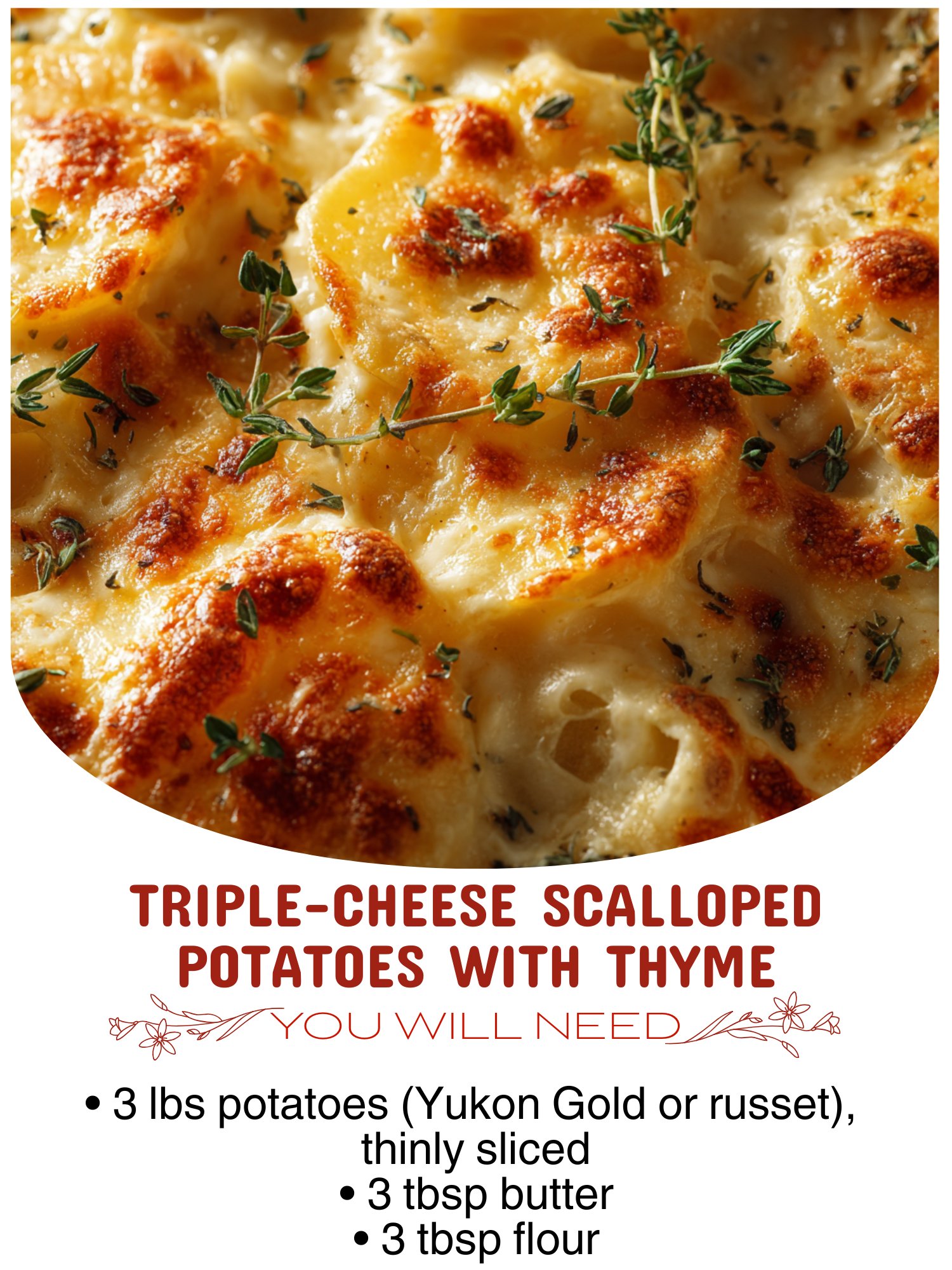
Scalloped potatoes done right are one of the most quietly impressive things to come out of a home oven. Thin slices of potato layered with a sauce built on three distinct cheeses, fragrant thyme running through every layer, baked until the top is golden and the inside is silky and tender all the way through.
This Triple-Cheese Scalloped Potatoes with Thyme recipe is the one you bring to holidays, dinner parties, and any occasion where you want the side dish to genuinely compete with the main.
Quick Info
- Prep Time: 25 minutes
- Cook Time: 65 minutes
- Servings: 8
- Difficulty: Easy-Medium
Ingredients
For the Potatoes:
- 3 lbs Yukon gold potatoes, peeled and sliced ⅛ inch thick
- 1 teaspoon salt
- ½ teaspoon black pepper
For the Three-Cheese Sauce:
- 3 tablespoons unsalted butter
- 4 garlic cloves, minced
- 1 small shallot, finely diced
- 3 tablespoons all-purpose flour
- 2 cups whole milk, warmed
- 1 cup heavy cream
- 1½ cups Gruyère cheese, freshly grated
- 1 cup sharp white cheddar, freshly grated
- ½ cup Parmesan cheese, freshly grated
- 1 tablespoon fresh thyme leaves (plus extra for garnish)
- 1 teaspoon Dijon mustard
- ½ teaspoon smoked paprika
- ½ teaspoon onion powder
- Pinch of nutmeg
- Salt and white pepper to taste
Step-by-Step Instructions
- Preheat oven to 375°F and butter a deep 9×13 baking dish or a 3-quart gratin dish thoroughly — the cream sauce bubbles aggressively at the edges and proper greasing prevents sticking and makes serving significantly easier.
- Slice potatoes uniformly at ⅛ inch thick — a mandoline is the most reliable tool here. Consistent thickness is the single most important factor in evenly cooked scalloped potatoes. Place sliced potatoes in cold water to prevent browning while you build the sauce.
- Make the cheese sauce by melting butter in a heavy saucepan over medium heat. Add shallot and cook 3 minutes until softened. Add garlic and cook another minute.
- Add flour and whisk constantly for 2 minutes until the roux turns slightly golden and smells nutty — this eliminates raw flour taste and builds the thickening base for the sauce.
- Pour warmed milk in slowly, whisking continuously. Add heavy cream and keep whisking until the béchamel is completely smooth. Simmer 4–5 minutes over medium-low heat, stirring frequently, until it thickens enough to coat the back of a spoon.
- Season the béchamel with Dijon mustard, smoked paprika, onion powder, nutmeg, salt, and white pepper. Taste and adjust — the sauce should be well-seasoned since it carries flavor through every layer of potato.
- Remove from heat and add Gruyère and white cheddar in two batches, stirring between each addition until fully melted and silky. Reserve all the Parmesan for topping.
- Stir in fresh thyme and taste one final time for seasoning.
- Drain and dry potato slices thoroughly — excess water dilutes the sauce and prevents proper layering.
- Build the first layer — arrange one-third of the potato slices in overlapping rows across the baking dish. Ladle one-third of the cheese sauce evenly over the potatoes, spreading to the edges.
- Repeat layering twice more — potatoes, sauce, potatoes, sauce — finishing with the final ladle of sauce spread across the top layer of potatoes.
- Scatter Parmesan generously over the entire surface, then finish with fresh thyme leaves and a crack of black pepper.
- Cover tightly with foil and bake 45 minutes. Remove foil and bake uncovered 20–25 minutes more until the top is deeply golden, edges are bubbling vigorously, and a knife inserted in the center meets absolutely no resistance.
- Rest 15 minutes before serving — the sauce needs this time to set and the potatoes need to settle into their final texture. Cutting early produces a loose, sliding result that doesn’t plate well.
Success Tips & Common Mistakes
Warm the milk before adding to the roux. Cold milk hitting a hot roux creates stubborn lumps that are frustrating to whisk out. Thirty seconds in the microwave before it goes into the pan makes the entire process smooth and quick.
Dry the potatoes before layering. Potatoes soaked in water release extra moisture during baking, thinning the sauce and preventing that tight, cohesive layered structure. After draining, spread them on a clean kitchen towel and pat dry before building the layers.
Season every layer. The sauce carries most of the seasoning, but a light pinch of salt and pepper directly on each potato layer before adding sauce builds more complex, even flavor throughout the finished dish rather than having all the seasoning sitting in the sauce alone.
Gruyère is the non-negotiable cheese here. It melts beautifully, has an earthy nuttiness that pairs perfectly with thyme, and produces that characteristic stringy pull that makes scalloped potatoes so satisfying. Substituting with a milder cheese flattens the flavor considerably.
Never rush the rest time. Fifteen minutes feels long when the dish smells incredible, but the cream sauce is still loose and flowing at the moment it comes from the oven. That rest period is what transforms it from soup with potatoes into the elegant, sliceable gratin it’s supposed to be.
Serving Ideas & Healthy Substitutions
- Serve alongside herb-crusted roast lamb, prime rib, or roasted chicken for a holiday spread where the side dish matches the occasion completely
- Add caramelized onions, sautéed mushrooms, or blanched leeks between the potato layers for a more complex, vegetable-forward version that works as a complete healthy family dinner
- Swap heavy cream for evaporated whole milk to reduce the fat content significantly while maintaining a genuinely creamy sauce texture
- Use low-fat milk and reduced-fat Gruyère for a lighter version that still delivers the layered elegance of the original — a reasonable approach for a more weight loss friendly meal side dish
- Replace one-third of the potatoes with thinly sliced parsnips or fennel for natural sweetness and a more sophisticated flavor profile that surprises and impresses guests
- For a gluten free dinner, substitute the flour in the roux with cornstarch or a gluten free flour blend — use slightly less than the listed amount and whisk well to prevent any clumping
- This is an ideal meal prep idea for holiday entertaining — assemble completely the day before, refrigerate unbaked covered in foil, and bake fresh adding 15 extra minutes to the covered stage
- The recipe scales beautifully for large gatherings — double everything and use two baking dishes for a genuinely budget friendly meal that feeds a crowd with minimal extra effort
FAQ
Why are my scalloped potatoes watery? Almost always one of three causes — the potatoes weren’t dried properly after soaking, the sauce wasn’t thick enough before layering, or the dish was cut before the rest period finished. All three are fixable. Dry potatoes thoroughly, make sure the béchamel coats a spoon thickly before assembling, and commit to the full 15-minute rest without exception.
Can I make this with russet potatoes? Russets work but behave differently — they absorb more liquid and can turn slightly mealy after the long bake. Yukon golds have a naturally waxy, buttery texture that holds up beautifully through 90 minutes of heat and produces cleaner, more defined layers. If russets are your only option, slice them slightly thicker and expect a softer overall texture.
What’s the best way to reheat scalloped potatoes without drying them out? Cover tightly with foil and reheat in a 325°F oven for 20–25 minutes. Drizzle a small amount of warm cream or milk across the top before covering — it rehydrates the sauce and brings everything back to a silky consistency. Microwave reheating works in a pinch but always cover the dish and use medium power to avoid drying the edges.
Final Thoughts
Triple-Cheese Scalloped Potatoes with Thyme is the kind of recipe that elevates an entire meal. The layering technique, the three-cheese sauce, the way fresh thyme perfumes every single bite — it all comes together into something that tastes far more complex than the ingredient list suggests. Master the sauce and the slicing and this becomes the side dish people specifically request you bring to every gathering from this point forward.